Introduction — What “Negative Ions” Really Mean for Indoor Air
Indoor air often contains invisible microscopic particles — like dust, pollen, smoke, pet dander, mold spores, and VOCs (volatile organic compounds) — that can cause irritation, allergies, or respiratory discomfort. One scientifically grounded way to reduce these airborne contaminants is through negative ionization — a method that uses electrically charged particles to improve air quality.
This guide breaks down the science behind negative ion air purifiers, explains how they work step-by-step, and shows how Alpine Air Technologies incorporates this technology into its purifier designs to treat air throughout your space.
What Are Ions? A Simple Science Primer
An ion is an atom or molecule that carries an electrical charge because it has gained or lost electrons.
-
Negative ions: have extra electrons, giving them a negative charge
-
Positive ions: have lost electrons, giving them a positive charge
In nature, negative ions are abundant near waterfalls, ocean surf, forested areas, and after thunderstorms — which is why fresh outdoor air feels “cleaner.”
How Negative Ion Air Purifiers Work — Step-by-Step
1. Ion Generation — Sending Charges Into the Air
Negative ion air purifiers contain a negative ion generator that emits trillions of negatively charged particles (ions) into the air continuously. These ions spread throughout the room rather than just inside a tiny filter chamber.
2. Ions Attach to Airborne Particles
Once in the indoor air, negative ions seek out particles such as dust, pollen, smoke, pet dander, and other contaminants that tend to have a positive charge. When a negative ion attaches to one of these particles, it changes the particle’s electrical state.
3. Particles Become Heavier & Cluster Together
After being charged, particles begin to attract each other, in a process known as agglomeration. This causes many small particles to clump into larger clusters — essentially combining many tiny bits into heavier packages.
4. Gravity Pulls Them Out of the Breathing Zone
Because these clumped particles are now heavier, they begin to settle out of the air we breathe more quickly. Rather than floating in the space around your head and chest, they fall onto surfaces where they can be removed with normal cleaning.
5. Air Feels Fresher & Has Fewer Irritants
As fewer small particles remain suspended in the air, the indoor environment feels clearer and less irritating — especially helpful for allergy sufferers and homes with pets or high dust levels.
What Happens Physically to a Particle in Ion-Rich Air
Here’s a typical sequence:
-
Small particle floats in air (e.g., dust
-
Negative ion attaches — particle becomes charged
-
Charged particles cluster — come together in larger groups
-
Heavier clumps fall — settle more quickly due to gravity
-
Air is clearer — fewer particles suspended in breathing zones
This is a physical mechanism grounded in electrical charge interactions, not just vague marketing language — and it’s the same basic science as natural outdoor ion effects near waterfalls or during storms.
How Negative Ions Compare to Traditional Filtration
| Feature | Negative Ionization | Traditional HEPA Filtration |
|---|---|---|
| How it removes particles | Charges & clumps particles so they settle out | Traps particles as air passes through a filter |
| Coverage style | Treats air throughout the entire room | Only treats air that is pulled into the unit |
| Effect on gases & odors | Limited — mostly acts on particles | May require added carbon filters |
| Maintenance needs | No filter replacements required | Filters require periodic replacement |
| Best at | Reducing fine particulates & allergens floating in air | Capturing particles mechanically in a controlled path |
Alpine Air Technologies & Negative Ion Purification
Alpine Air purifiers use a proprietary blend of ion-based purification combined with controlled levels of activated oxygen (similar to natural ozone) to help reduce particles and odors in indoor spaces. This process is inspired by nature’s own air-cleaning mechanisms — like the fresh air after a thunderstorm, which naturally contains both negative ions and activated oxygen.
This approach — often called Living Lightning™ technology — is:
✔ Continuous — treating the whole room, not just air passing through a small filter
✔ Designed to be safe and controlled with low ozone output
✔ Effective at reducing a range of irritants such as dust, smoke, pollen, and pet dander
Alpine Air Purifiers That Use Negative Ion Technology
Fresh Air LA-3500 v2.0 — Whole-Room Air Cleaner
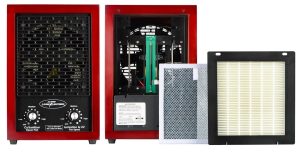
The Fresh Air LA-3500 v2.0 combines negative ion generation with activated oxygen to treat large spaces and help reduce airborne particles, odors, and common household pollutants. Ideal for family rooms or open areas.
Best for: Large shared spaces — living rooms, open floor plans
Alpine Living LA-1500 v2.0 — Balanced Everyday Support
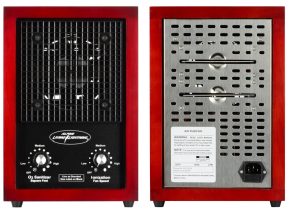
A versatile option for medium-sized rooms — bedrooms, offices, or common areas — reducing fine particles and supporting fresher air throughout the day and night.
Best for: Bedrooms, offices, dens
Alpine Pass LA-1000 v2.0 — Compact Ion-Enhanced Purifier
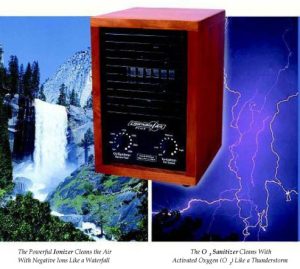
The Alpine Pass LA-1000 v2.0 is great for smaller rooms or targeted spaces, helping reduce airborne allergens and particles where people spend much of their time.
Best for: Small bedrooms, dens, guest rooms
Alpine Single Room LA-500 v3.0 — Focused Indoor Air Support
Ideal for personal spaces — study rooms, home offices, or bedrooms — this unit helps reduce fine particles and create a clearer breathing zone.
Best for: Smaller personal spaces
Are Negative Ions Safe? What You Should Know
Natural negative ions themselves are not harmful — they’re present outdoors near waterfalls, oceans, and after thunderstorms. In air purifiers, it’s how ions are generated and whether ozone is also produced that matters most. Careful designs, like those in Alpine Air products, aim to:
✔ Produce controlled, low levels of activated oxygen rather than unsafe ozone
✔ Keep ion generation within safe indoor levels
✔ Avoid harmful emissions by design and testing
Note: Some consumer sources caution that low-quality ionizers may produce unsafe ozone or be ineffective if poorly engineered — so always check certifications and specifications.
Negative Ions vs. Other Technologies: Why It Matters
Negative ionization complements other purification strategies:
-
Ionization + Mechanical Filtration: A blended approach can target fine particles while filters capture larger ones.
-
Ionization + Activated Oxygen: Helps reduce certain odors and chemical molecules that filters alone may not address efficiently.
Together, these methods help provide more comprehensive indoor air improvements than any single technology used alone.
Conclusion — The Science of Cleaner Air
Negative ion air purifiers don’t magically erase all pollutants, but their scientific process of charging and clumping particles helps reduce the amount of fine airborne material in your breathing zone. When combined with technologies like controlled activated oxygen — as in Alpine Air Technologies products — they deliver a continuous air-treatment strategy that mimics natural air cleaning processes.
👉 Explore Alpine Air’s full line of ion-enhanced air purifiers and improve your indoor air quality:
https://alpineairtechnologies.com/products/