Choosing the Right Air Purification Technology
Shopping for an air purifier can be confusing because today’s products use several different technologies. Some rely entirely on HEPA filters, while others use negative ionization, activated oxygen (ozone), UV light, photocatalytic oxidation (PCO), or combinations of these methods.
Each technology works differently and has distinct strengths and limitations. Understanding those differences helps you choose the best solution for your home, office, or business.
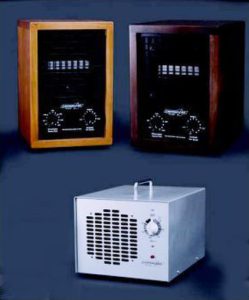
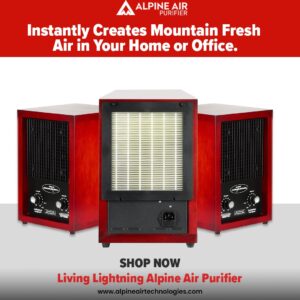
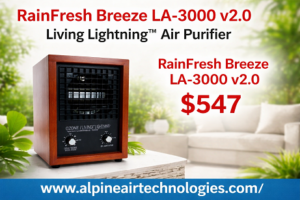
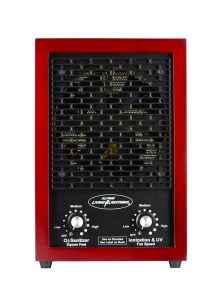
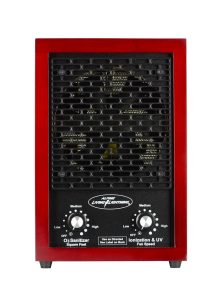
Alpine Air Purifier systems combine multiple purification technologies—including Living Lightning™, negative ionization, activated oxygen, UV purification, and photocatalytic oxidation—rather than relying on a single approach.
Understanding the Three Main Technologies
1. HEPA Filtration
HEPA (High-Efficiency Particulate Air) filtration is a mechanical filtration system.
Air is pulled through a dense filter that captures airborne particles such as:
- Dust
- Pollen
- Pet dander
- Mold spores
- Many airborne particles
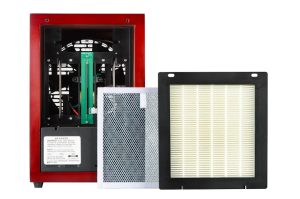
True HEPA filters are widely recognized for high particle-capture efficiency, but they primarily treat the air that passes through the filter and require periodic replacement. They are also often paired with activated carbon filters to help address odors and gases.
Advantages
✔ Excellent particle filtration
✔ Effective for pollen
✔ Good for dust
✔ Proven mechanical technology
Limitations
- Filters require replacement
- Performance depends on airflow reaching the unit
- HEPA alone does not remove many gases or odors without additional carbon filtration.
2. Negative Ionization
Negative ion air purifiers generate negatively charged ions that attach to airborne particles.
As particles gain electrical charge they may:
- Clump together
- Become easier to capture
- Settle out of the air
Many ionization systems combine this technology with additional purification methods. Alpine includes negative ionization as one component of its Living Lightning™ systems.
Advantages
✔ Helps reduce airborne particles
✔ Works continuously
✔ Low routine maintenance
✔ Often used in filterless designs
Considerations
Ionization technologies vary significantly between manufacturers. Some designs may generate ozone as a byproduct, and opinions differ regarding their appropriate use. Users should always follow manufacturer instructions and applicable safety guidance.
3. Activated Oxygen (O₃)
Activated oxygen—commonly known as ozone (O₃)—is a reactive form of oxygen.
Rather than mechanically trapping particles, activated oxygen reacts with certain odor-causing compounds and contaminants. It has long been used in odor-control applications such as smoke, cooking smells, pet odors, and restoration work. Alpine combines activated oxygen with other purification technologies in several of its products.
Advantages
✔ Excellent odor reduction
✔ Helpful for smoke odors
✔ Helps with cooking smells
✔ Useful for restoration applications
Important Note
Because ozone can irritate the respiratory system at elevated concentrations, ozone-generating products should always be used according to the manufacturer’s instructions and applicable health guidance. They are not appropriate for every situation or user.
Side-by-Side Technology Comparison
| Feature | HEPA | Negative Ionization | Activated Oxygen |
|---|---|---|---|
| Dust | ⭐⭐⭐⭐⭐ | ⭐⭐⭐⭐ | ⭐⭐ |
| Pollen | ⭐⭐⭐⭐⭐ | ⭐⭐⭐⭐ | ⭐ |
| Pet Dander | ⭐⭐⭐⭐⭐ | ⭐⭐⭐⭐ | ⭐⭐ |
| Smoke Particles | ⭐⭐⭐⭐ | ⭐⭐⭐ | ⭐⭐⭐⭐ |
| Smoke Odors | ⭐⭐ (with carbon: ⭐⭐⭐⭐) | ⭐⭐⭐ | ⭐⭐⭐⭐⭐ |
| Cooking Odors | ⭐⭐ | ⭐⭐⭐ | ⭐⭐⭐⭐⭐ |
| Filter Replacement | Yes | Usually minimal | Minimal |
| Routine Maintenance | Moderate | Low | Low |
| Whole-Room Treatment | Air passing through unit | Assists airborne particles | Reacts within treated space (per manufacturer) |
Why Alpine Uses Multiple Technologies
Many indoor air quality challenges involve both particles (dust, pollen, pet dander) and odors or gases (cooking smells, smoke, VOCs). A multi-technology approach aims to address different types of contaminants.
According to Alpine, Living Lightning™ systems combine:
- Negative ion generation
- Activated oxygen
- UV germicidal technology
- Photocatalytic oxidation
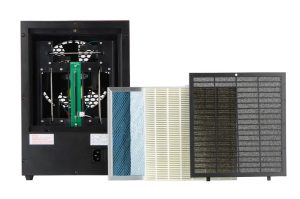
- Carbon filtration (on select models)
to provide broader indoor air treatment.
Featured Alpine Air Purifiers
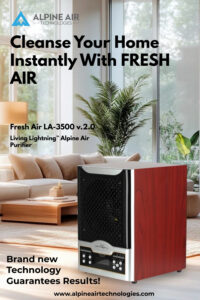
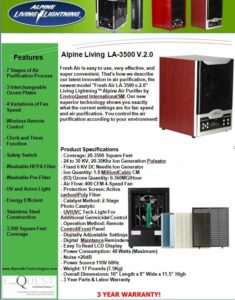
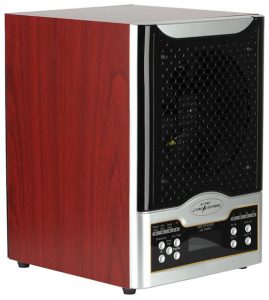
Fresh Air LA-3500 v2.0 – Alpine’s Flagship System
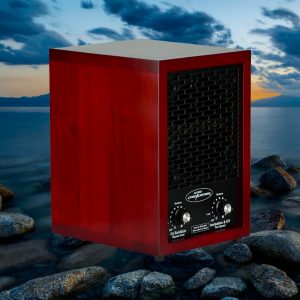
The Fresh Air LA-3500 v2.0 combines multiple purification technologies into one system.
Features
- Living Lightning™ Technology
- Negative ion generation
- Activated oxygen
- Dual UV bulbs
- Photocatalytic oxidation
- SmartAir™ monitoring
Coverage: 20–3,500+ sq. ft. according to Alpine.
Classic LA-3500 v2.0


Designed for larger homes and businesses, the Classic LA-3500 v2.0 combines UV, activated oxygen, negative ionization, and carbon filtration for comprehensive indoor air treatment.
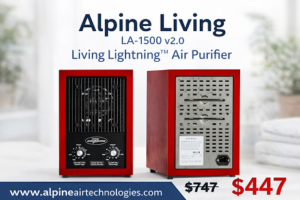
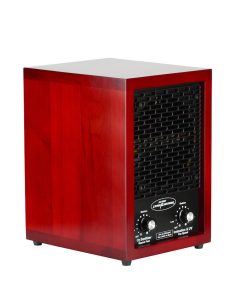
Alpine Living LA-1500 v2.0
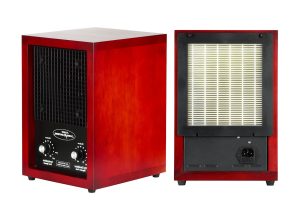
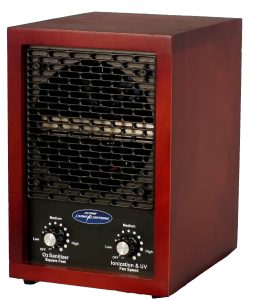
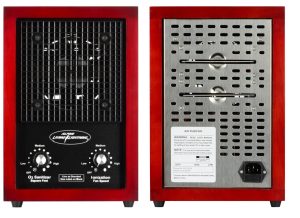
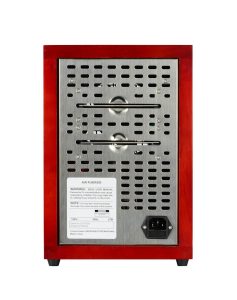
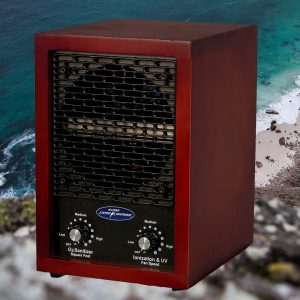
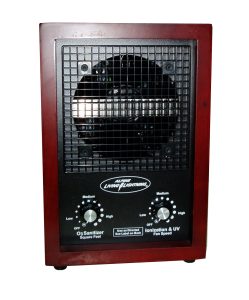
The Alpine Living LA-1500 v2.0 is a filterless model intended for apartments, condos, and smaller homes. Alpine notes that this model uses a stainless-steel back with a back-to-front airflow design rather than a conventional replaceable filter.
Single Room LA-500 v3.0
Ideal for:
- Bedrooms
- Nurseries
- Dorm rooms
- Home offices
Coverage is approximately 20–500 sq. ft. according to Alpine’s product information.
Which Technology Is Best?
The answer depends on your primary concern:
- Dust, pollen, and pet dander: HEPA filtration is well established for particle removal.
- General indoor particle reduction with low maintenance: Ionization systems may be an option, particularly when combined with other technologies.
- Smoke and persistent odors: Activated oxygen is commonly used for odor control, but products should be used according to manufacturer guidance.
- Mixed indoor air quality issues: A multi-technology system may provide broader coverage than relying on one technology alone.
Frequently Asked Questions
Is HEPA better than ionization?
Neither is universally “better.” HEPA excels at mechanically capturing particles, while ionization works differently by electrically charging airborne particles. Some systems combine both approaches.
Does activated oxygen remove odors?
Activated oxygen (ozone) is commonly used because it reacts with many odor-causing compounds. It should always be used according to manufacturer recommendations.
Why does Alpine combine multiple technologies?
Alpine states that combining technologies allows its systems to address a wider variety of indoor air quality concerns than a single technology alone.
Are Alpine systems filterless?
Some models, including the Alpine Living LA-1500 v2.0, are designed as filterless systems, while larger models include additional purification components such as carbon filters and UV technology.
Final Thoughts
There is no single air purification technology that is ideal for every environment. HEPA filtration is a strong choice for removing airborne particles, negative ionization provides a different approach to particle management, and activated oxygen is widely used for odor control. Many premium systems—including Alpine’s Living Lightning™ lineup—combine several technologies to target particles, odors, and other indoor air quality concerns in one integrated solution. As with any air purifier, selecting the right model depends on your room size, indoor air quality goals, and following the manufacturer’s operating instructions.