Introduction — Why Ozone in Air Purifiers Is Controversial
Ozone (O₃) often gets bad press when it comes to air purifiers — and for good reason. At the right concentrations, ozone can react with and neutralize some odors and chemicals. But at higher concentrations, it’s a known respiratory irritant that can harm lung tissue and worsen conditions like asthma.
This blog helps you separate myths from facts about ozone in air purifiers, understand what health authorities say, and learn how Alpine Air Technologies uses controlled ozone safely when it’s incorporated into its products. We’ll also show suitable products and proper use habits so you can make an informed decision for your home’s indoor air quality.
What Is Ozone (O₃)? A Quick Science Overview
Ozone is a molecule made of three oxygen atoms instead of the usual two. It exists naturally in the upper atmosphere (protecting us from UV rays) and can also form near the ground after lightning storms or around waterfalls — giving that “fresh air” scent many people recognize.
At high levels, however, ozone can be harmful when inhaled:
-
Chest pain
-
Coughing or throat irritation
-
Shortness of breath
-
Worsened asthma symptoms
-
Reduced lung function
Regulators like the U.S. EPA warn that ozone concentrations above health standards can do more harm than good and that devices marketed as “ozone air purifiers” can sometimes produce unsafe ozone indoors.
Myth vs. Fact: Ozone & Air Purification
❌ Myth 1: All ozone air purifiers are unsafe
✔ Fact: Safety depends on ozone level and how it’s used.
Ozone at high concentrations is harmful, but some technologies (including certain Alpine Air models) are engineered to produce only low, controlled levels intended to help reduce odors and certain compounds without exceeding safety thresholds.
❌ Myth 2: Ozone is effective at removing all pollutants
✔ Fact: Ozone reacts with some molecules, especially odors or certain chemical gases, but it does not effectively remove particulate matter (dust, pollen, mold spores) at safe levels. Regulatory guidance notes that low ozone has limited ability to clean many indoor air pollutants unless used with other strategies.
❌ Myth 3: All air purifiers that mention oxygen means unsafe ozone
✔ Fact: Some purifiers use controlled ozone as part of a multi-stage purification process, with strict output limits and other technologies like negative ions. Other devices marketed as “ozone generators” (which produce high ozone) are not the same as controlled-output purifiers.
What Health Authorities Say About Ozone in Air Cleaners
Regulatory bodies including the U.S. EPA and the California Air Resources Board (CARB) have issued warnings about air cleaners that produce high levels of ozone:
-
Many “ozone generators” can emit ozone indoors at concentrations exceeding public health standards.
-
Ozone can react with household chemicals to form other harmful byproducts, like formaldehyde.
-
The EPA states that at concentrations below public health limits, ozone is generally ineffective at removing most indoor air contaminants.
Bottom line (from independent science):
Ozone can be hazardous if produced at high levels or in spaces where people are present; safe usage requires careful control and monitoring.
How Alpine Air Technologies Uses Ozone (Safely & Intentionally)
Unlike unregulated ozone generators or devices that produce ozone as their primary mechanism, Alpine Air Technologies uses ozone as one component among multiple purification methods — specifically within its Living Lightning™ technology which also includes negative ionization and electric fields.
Key Alpine Air safety principles:
✔ Controlled, low ozone output: Designed to stay within safe ranges and avoid respiratory irritation.
✔ Adjustable ozone settings: Users can tailor ozone output to comfort levels and needs.
✔ Part of a broader system: Ozone complements particle reduction via other purification stages.
✔ Optional feature: Many Alpine purifiers allow ozone to be turned off entirely if users prefer.
According to Alpine’s own guidance, their units produce trace amounts of ozone — similar to what you might encounter outdoors after rain — and are engineered to stay below maximum allowed ozone output for safety.
Alpine Air Purifiers With Controlled Ozone (And Pictures)
Below are some popular Alpine Air purifiers that use controlled ozone along with negative ions and other purification methods to help improve indoor air.
🏠 Fresh Air LA‑3500 v2.0 — Whole-Room Purifier
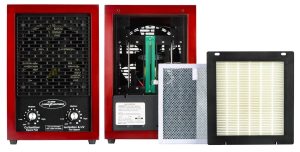
The Fresh Air LA-3500 v2.0 combines negative ions with controlled ozone output to tackle dust, odors, smoke particles, and volatile chemicals in larger living spaces. Its balanced design helps maintain cleaner indoor air while avoiding excessive ozone levels.
🌬 Alpine Living LA‑1500 v2.0 — Everyday Indoor Air Cleaner
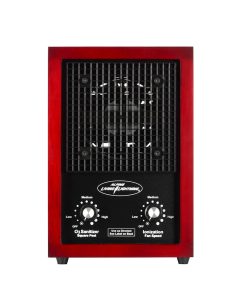
Ideal for bedrooms, offices, and medium rooms, this model’s controlled ozone helps reduce odors and improve fresh air perception while negative ionization assists in particle mitigation.
🏡 Alpine Pass LA‑1000 v2.0 — Compact Purifier
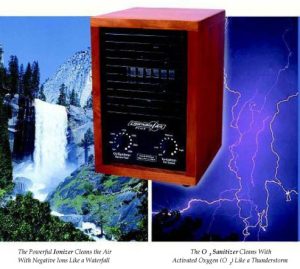
This compact unit is a great choice for smaller spaces like dens, guest rooms, or offices. Its ozone output is adjustable or optional, letting you customize the purification effect to your preference.
When Ozone Use Might Be Appropriate
While regulators warn against high ozone output, some controlled applications can be useful:
✔ To help neutralize odors and some VOCs that standard filtration struggles with.
✔ In larger, well-ventilated spaces where low ozone won’t accumulate.
✔ As a complement to other purification strategies (ionization, filters, ventilation).
However, experts also caution that ozone alone is not a solution for most indoor air pollutants and can pose health risks if used at high levels or improperly.
Safety Tips & Best Practices
📌 1. Follow Manufacturer Instructions
Always use ozone-capable devices according to guidance — especially controlling output levels and placement.
📌 2. Monitor Sensitive Individuals
Children, people with asthma, and those with respiratory issues might be more sensitive to ozone — adjust or disable the ozone feature if needed.
📌 3. Combine With Other Methods
Don’t rely on ozone alone — pair it with ventilation, dust control, humidity management, and HEPA filtration for a comprehensive IAQ strategy.
Conclusion — Separating Fact From Fiction About Ozone Purifiers
There’s a lot of confusion around ozone in air purifiers, largely because unmanaged, high-output ozone can be hazardous indoors. Health agencies like the EPA warn that poorly designed ozone generators can produce unsafe levels that damage lung tissue and form other harmful byproducts.
However, controlled, low-level ozone output — designed with safety in mind — can be part of a broader indoor air purification strategy, as seen in product lines from Alpine Air Technologies that combine ozone with negative ions and other methods to help address odors and certain airborne compounds.
👉 For air purification that balances effectiveness with safety, explore Alpine Air’s product line and consider how controlled ozone fits your indoor air goals:
https://alpineairtechnologies.com/products/