Introduction: Clean Air Starts With Understanding the Science
Indoor air often contains particles like dust, pollen, smoke, pet dander, and microbes. These tiny particles can irritate your respiratory system, trigger allergies, or reduce overall comfort. One scientifically grounded method to reduce airborne contaminants is negative ionization—a process that helps clean the air you breathe.
This article explains the science behind negative ions and how they help remove particles, why this matters for your health, and how Alpine Air Technologies air purifiers use this technology to improve indoor air quality.
What Are Ions? A Quick Science Primer
An ion is an atom or molecule that carries an electrical charge because it has gained or lost electrons.
-
Negative ions have extra electrons → negatively charged
-
Positive ions have lost electrons → positively charged
In nature, negative ions are created by:
✔ Sunlight
✔ Waterfalls, waves, rainstorms
✔ Lightning
Many people describe the fresh air feeling after a storm or near a waterfall — that’s the presence of natural negative ions.
How Negative Ionization Helps Clean Indoor Air
1. Ions Attach to Airborne Particles
When a purifier emits negative ions, these charged particles spread through the air and attach to airborne contaminants such as:
-
dust
-
pollen
-
smoke particles
-
pet dander
-
mold spores
Once an ion attaches to a particle, it changes the particle’s electrical charge and makes it heavier.
2. Charged Particles Clump Together
Negatively charged ions cause small particles to attract each other. This process is called agglomeration—particles stick together to form larger clumps that are easier to remove either by:
✔ Settling out of the air
✔ Being captured by airflow circulation and then removed by cleaning
3. Heavier Particles Fall Out of the Breathing Zone
Because clumped particles are heavier, they drop out of the breathable air stream more quickly. This reduces the concentration of tiny airborne particles in the space where we breathe.
How This Compares With Traditional Filters
| Feature | HEPA Filters | Negative Ionization |
|---|---|---|
| Removes particles passing through unit | ✔ | ✖ (works throughout the whole room) |
| Treats air only when pulled into purifier | ✔ | ✖ (ions travel with air currents) |
| Best at trapping mechanical particles | ✔ | ⚠ Works by charging & clumping particles |
| Removes gases & odors | ✖ (needs carbon) | ⚠ More effective at reducing odors indirectly |
Traditional HEPA filters capture particles mechanically as air passes through them. Negative ions, on the other hand, treat particles throughout the room, not just the air that passes through the purifier.
Are Negative Ions Safe?
Yes — negative ions themselves are not harmful. In nature, negative ions occur in forests, beaches, and waterfalls. What matters most is how they are produced in a device:
✔ Low, controlled levels of negative ions are beneficial for air treatment
✔ The systems must avoid high ozone output, which can be harmful in large amounts
Alpine Air Technologies devices are designed to produce controlled negative ionization levels — *akin to natural air purification processes — while avoiding harmful ozone levels.
Technical Yet Accessible: What Happens to a Particle in Ion-Rich Air
Let’s walk through it:
-
Particle in air: A dust particle floats around your living room.
-
Negative ion released: The purifier emits a negative ion.
-
Ion attaches: The ion latches onto the particle, giving it a negative charge.
-
Charged particle attracts others: Other particles nearby gain a charge and cluster together.
-
Particle mass increases: Larger clusters are heavier and fall faster out of the breathable air.
-
Air feels cleaner: Fewer particles remain airborne — which reduces irritation triggers.
This process is supported by both lab studies and practical air quality monitoring. It’s a physical mechanism rooted in electric charge interactions, not just marketing language.
Real-World Alpine Air Technologies Solutions
Here are Alpine Air purifiers that implement this science to help reduce airborne particles and improve indoor air:
Fresh Air LA-3500 v2.0 — Whole-Room Ion-Enhanced Purification
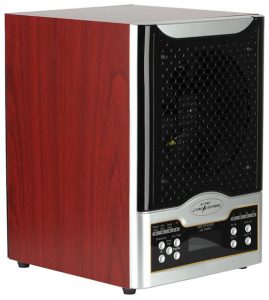
The Fresh Air LA-3500 v2.0 offers broad coverage and combines negative ionization with advanced sanitization to help reduce:
✔ Dust and pollen
✔ Smoke particles
✔ Pet dander
✔ Odors and airborne irritants
Best for: Living rooms, large shared spaces
Alpine Living LA-1500 v2.0 — Balanced Home Air Treatment
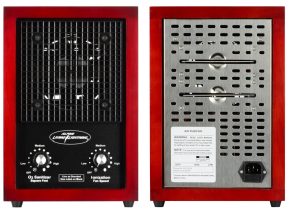
The Alpine Living LA-1500 v2.0 provides balanced air treatment for everyday environments like:
✔ Bedrooms
✔ Home offices
✔ Family areas
This unit uses negative ions to help improve air quality where people spend most of their time.
Alpine Pass LA-1000 v2.0 — Everyday Ion Support
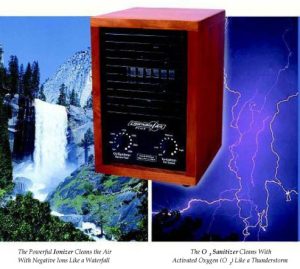
The compact Alpine Pass LA-1000 v2.0 is great for daily indoor purification in:
✔ Apartments
✔ Dens
✔ Smaller living spaces
It continuously emits negative ions to help keep airborne irritants lower.
Single Room LA-500 v3.0 — Targeted Ion-Enhanced Air Cleaning
For focused purification — such as in bedrooms or personal spaces — the LA-500 v3.0 uses negative ions to help reduce:
✔ Fine dust
✔ Allergens
✔ Small smoke particles
IPC-4000 Industrial Power Air Cleaner — Heavy-Duty Ion Treatment
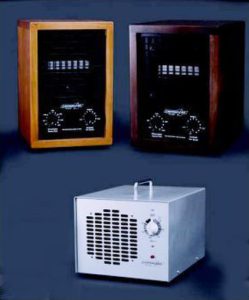
The IPC-4000 is designed for larger or more demanding indoor environments — like workshops or commercial spaces — offering industrial-strength purification with ionization and odor control.
Negative Ions vs. Other Purification Methods
| Technology | Particle Removal | Odor/Gas Control | Full-Room Effect | Filter Maintenance |
|---|---|---|---|---|
| HEPA Filter | ✔ (mechanical) | ✖ | ✖ | Replace Filters |
| Activated Carbon | ✖ | ✔ | ✖ | Replace Media |
| Negative Ionization | ⚠ (induces clumping) | ✔ (indirect) | ✔ | Minimal Plates |
Negative ions don’t trap particles the way a mechanical filter does, but they help transform airborne particles so they settle out of the breathing zone more effectively, complementing other purification strategies.
Final Thoughts: Why Negative Ions Matter for Clean Air
Negative ionization is a scientifically supported method that:
✔ Helps clump small airborne particles
✔ Improves air quality throughout the entire room
✔ Works continuously and quietly
✔ Complements traditional filtration methods
When used as part of a comprehensive indoor air quality strategy — especially combined with Alpine Air Technologies’ Living Lightning™ systems — negative ions can significantly reduce airborne contaminants that contribute to discomfort, allergies, and poor air quality.
👉 Explore Alpine Air’s full line of ion-enhanced air purifiers:
https://alpineairtechnologies.com/products/